
Define the edges
Saw-cut lines and protection of neighbouring paving can influence the finish left behind. Clearly mark which sections stay and which are removed.
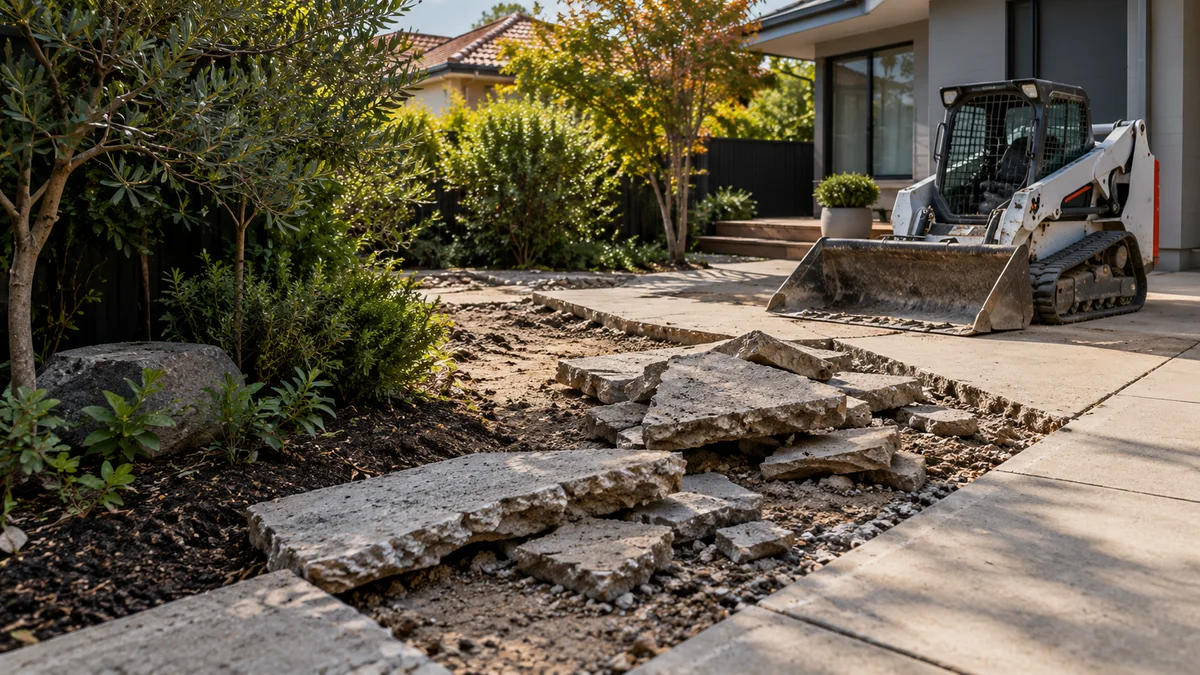
Plan the removal of unwanted slabs, paths or driveways, considering thickness, reinforcement, nearby services, loading access and the destination of the material.
Melbourne Concrete Removal projects benefit from a clear understanding of the site, the intended finish and how the work connects with the rest of the property.
Removing concrete can open up a site for a new layout. The scope should distinguish the concrete itself from the base beneath it and any adjacent surfaces to retain.
Planning should cover machine access, underground services, soil movement, spoil removal and protection of structures or landscaping that will remain. Clear levels and an agreed finish reduce uncertainty once excavation starts. For this service, define the edges and plan loading and disposal are useful matters to discuss when preparing the scope.
Share your property address, approximate dimensions and photos of the work area. Include the route from the street, any nearby structures and what you want the finished space to achieve.
Explore the details ↓How concrete comes out affects the edges left behind, the noise and dust on the day, and how the material is loaded. Many jobs combine more than one method.
Removing part of a slab or path while keeping the rest, giving a straight, clean edge to meet new work.
Cutting produces slurry or dust that needs managing, and the cut line should be marked and agreed first.
Whole slabs, paths or driveways where no edge needs to be kept.
Noise and vibration are higher, and breaking near concrete that stays can crack it beyond the intended line.
Sites with tight access, or where pieces could be reused as stepping stones or garden edging.
More cutting time, and each piece still needs a safe way to be lifted and moved.
Small pads, footings or corners a machine cannot reach.
Slow and physically demanding for anything beyond modest areas, and reinforcement still needs cutting.
A clear brief connects the material, the site and the final result.
Saw-cut lines and protection of neighbouring paving can influence the finish left behind. Clearly mark which sections stay and which are removed.
Thickness, steel reinforcement and machine access affect handling. Confirm whether the quote includes cartage, disposal and preparation for the next stage.
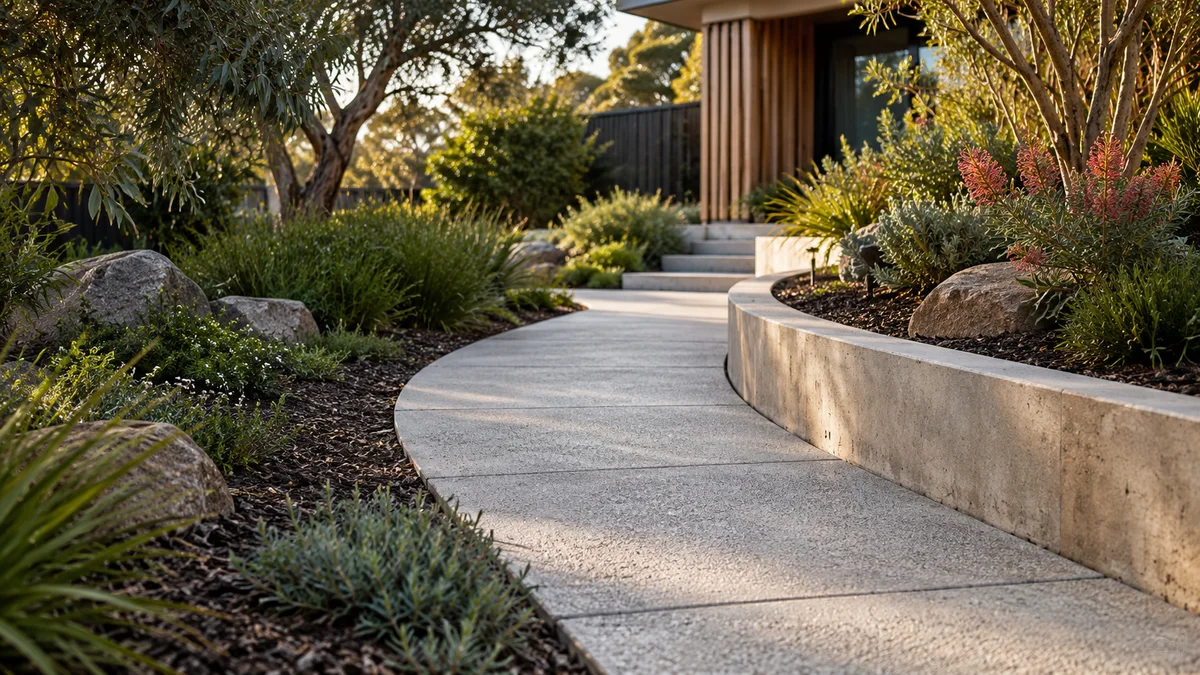
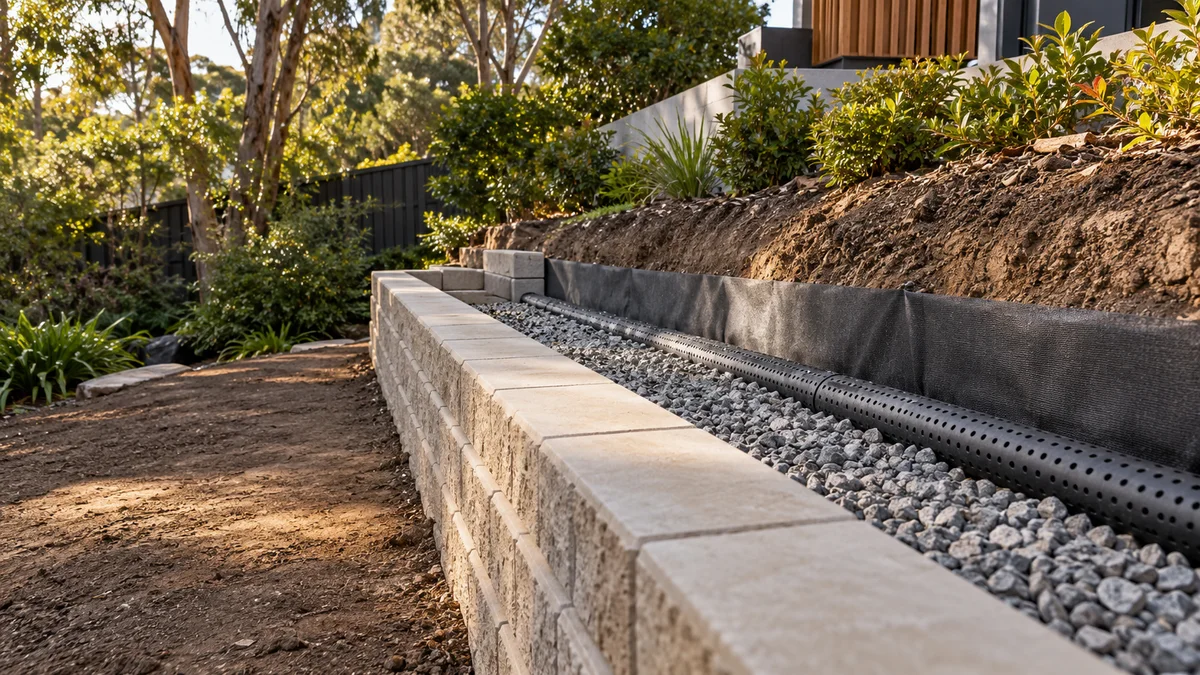
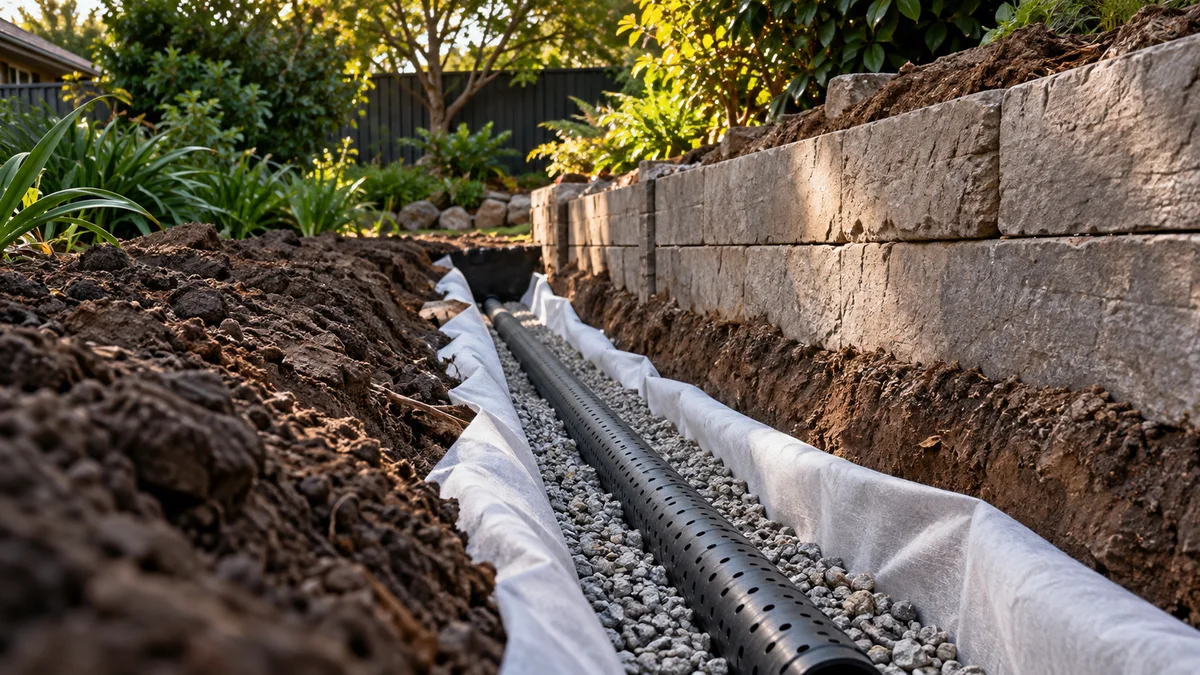
Supporting landscape and groundwork illustrations show connected project considerations, not completed work by Melbourne Retaining Walls.
Every property has different constraints. Use these steps to prepare a useful discussion about concrete removal.
Send the address, measurements and access photos, plus any existing drawings or reports.
Discuss the options above, any design input, drainage connections and the responsibilities for approvals.
Check preparation, materials, installation, disposal and reinstatement. Agree exclusions and timing before work is scheduled.
Old concrete often hides more than a layer of crushed rock. What turns up underneath can change the next stage of the project.
Beneath a slab you might find a sound, compacted base worth keeping, a patchy base that is not, old footings from a previous structure, or voids where soil has washed away. Pipes and cables are commonly run under paths and driveways, sometimes close to the surface, so check for services before cutting or breaking starts and take care as the slab comes up.
Tree roots that lifted and cracked the concrete may sit just below it. Rubble, buried rubbish or fill of unknown origin sometimes appears too, and it may need a different disposal route from clean concrete. Allow for these possibilities in the scope, and agree how unexpected finds will be raised and costed before they are dealt with.
Start planning with the details that matter.
Ask about your project ↗Suitable clean concrete may be accepted by a recycling facility. Acceptance depends on the material and local facility requirements, so confirm the disposal route for the job.
For this work, define the edges and plan loading and disposal are useful starting points. Site access, dimensions, existing conditions, disposal and any specialist requirements also need to be reflected in the scope.
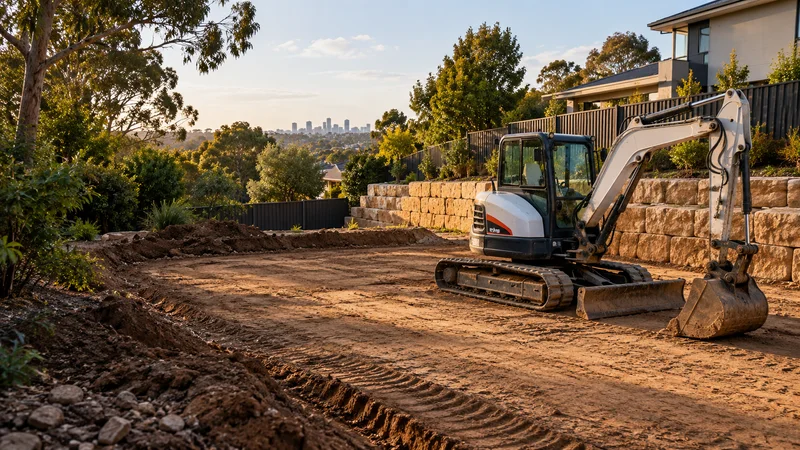
Prepare the ground around agreed levels and site constraints, considering underground services, machine access, material handling and spoil removal before excavation.
Learn more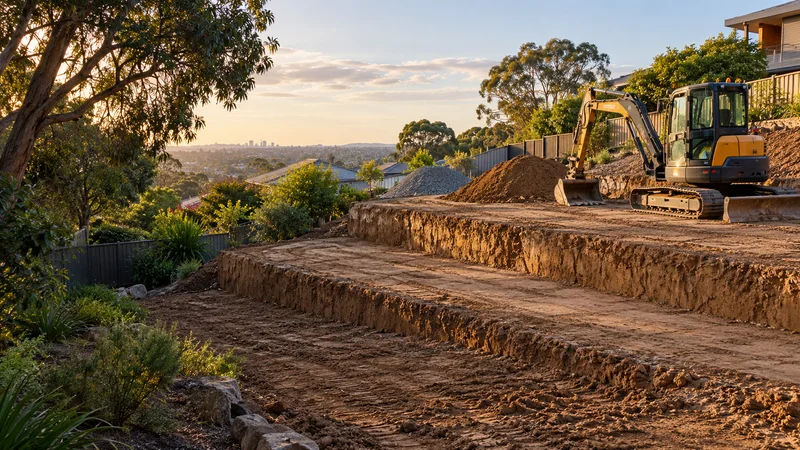
Slope excavation & levelling in Melbourne: plan terraces, finished levels, cut and fill, drainage, access and soil movement.
Learn more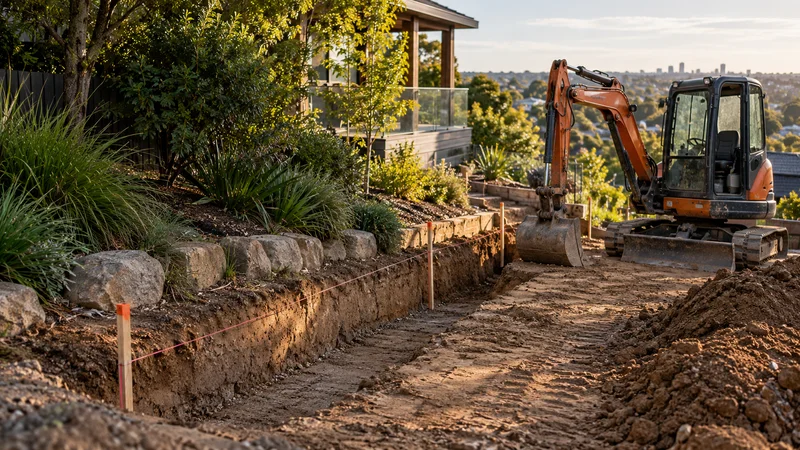
Retaining wall excavation in Melbourne: set-out, service checks, equipment access, footing preparation, spoil handling and reinstatement.
Learn moreThe right finish after removal depends on what comes next. Say what the area will become so the preparation matches it.
Base rock left behind makes a poor seedbed. Removing it, relieving compaction and bringing in suitable topsoil gives turf a chance to establish, with levels set so water runs away from the house.
Planting needs good soil and drainage. Old base material, concrete fragments and compacted subgrade usually need to come out, and edges against remaining paving need a clean finish.
An existing base may be reusable if it is sound and at the right level, but that needs checking rather than assuming. Falls and any connections to a new concrete path are easier to plan while the area is open.
If the next stage is some way off, ask for the area to be left safe, even and free of sharp fragments, with drainage paths clear so water does not pond against the house.
Share your ideas, your site and what you want to achieve.