
Establish the working area
Survey information, service locations and access restrictions help define the excavation. Nearby structures and neighbouring land may require additional design input.
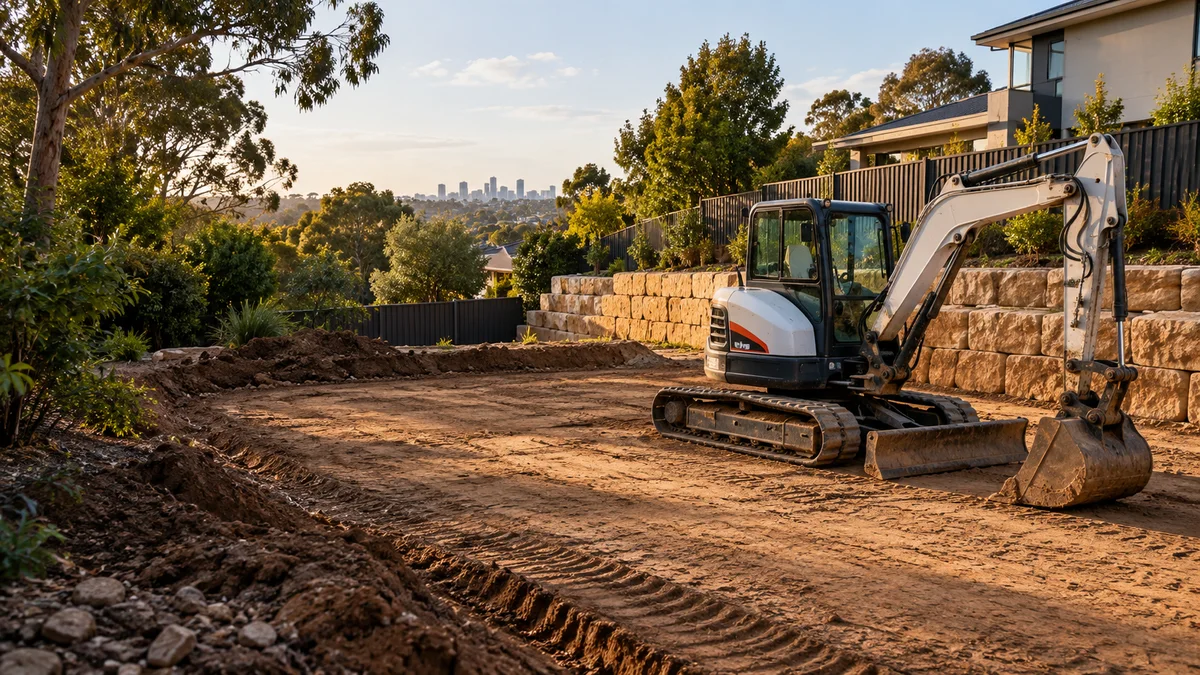
Prepare the ground around agreed levels and site constraints, considering underground services, machine access, material handling and spoil removal before excavation.
Melbourne Site Excavation projects benefit from a clear understanding of the site, the intended finish and how the work connects with the rest of the property.
Excavation sets up everything that follows. A clear scope should identify what is being removed, the required levels and the areas that need protection during the work.
Planning should cover machine access, underground services, soil movement, spoil removal and protection of structures or landscaping that will remain. Clear levels and an agreed finish reduce uncertainty once excavation starts. For this service, establish the working area and account for the material are useful matters to discuss when preparing the scope.
Share your property address, approximate dimensions and photos of the work area. Include the route from the street, any nearby structures and what you want the finished space to achieve.
Explore the details ↓
The parts of a property that are not being dug are often the ones most exposed to damage. Naming them in the scope gives everyone the same picture of what must survive the work.
Tree roots can extend well beyond the canopy, and compaction from repeated machine passes can harm a tree as much as cutting through roots. Existing paving, garden edging and irrigation lines near the work zone are easily cracked or crushed by tracks and loaded buckets. Boundary fences deserve particular care: digging close to a fence line can undermine posts, and the fence may be jointly owned with a neighbour.
Walk the site before any machine arrives and agree which features are protected, how they will be protected and who is responsible if something is disturbed. Photographs of existing condition, taken before work begins, make any later conversation far simpler.
A clear brief connects the material, the site and the final result.
Survey information, service locations and access restrictions help define the excavation. Nearby structures and neighbouring land may require additional design input.
Excavated material needs a destination. Discuss stockpiling, reuse suitability, testing where required and disposal before machines arrive.
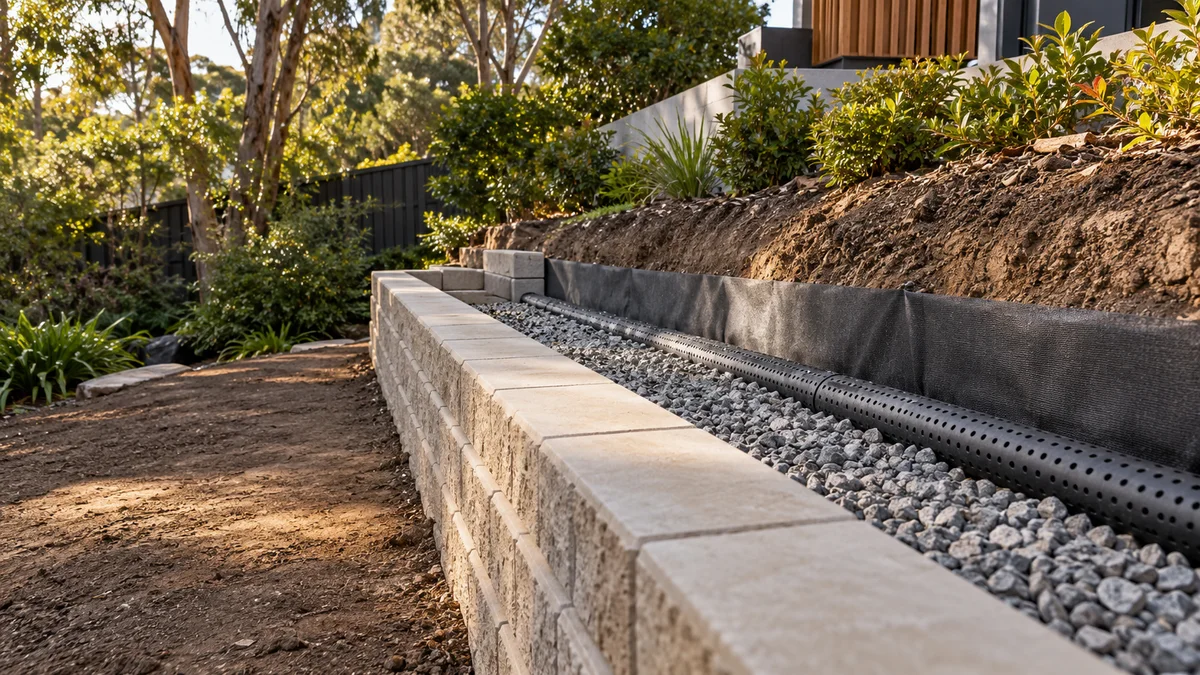
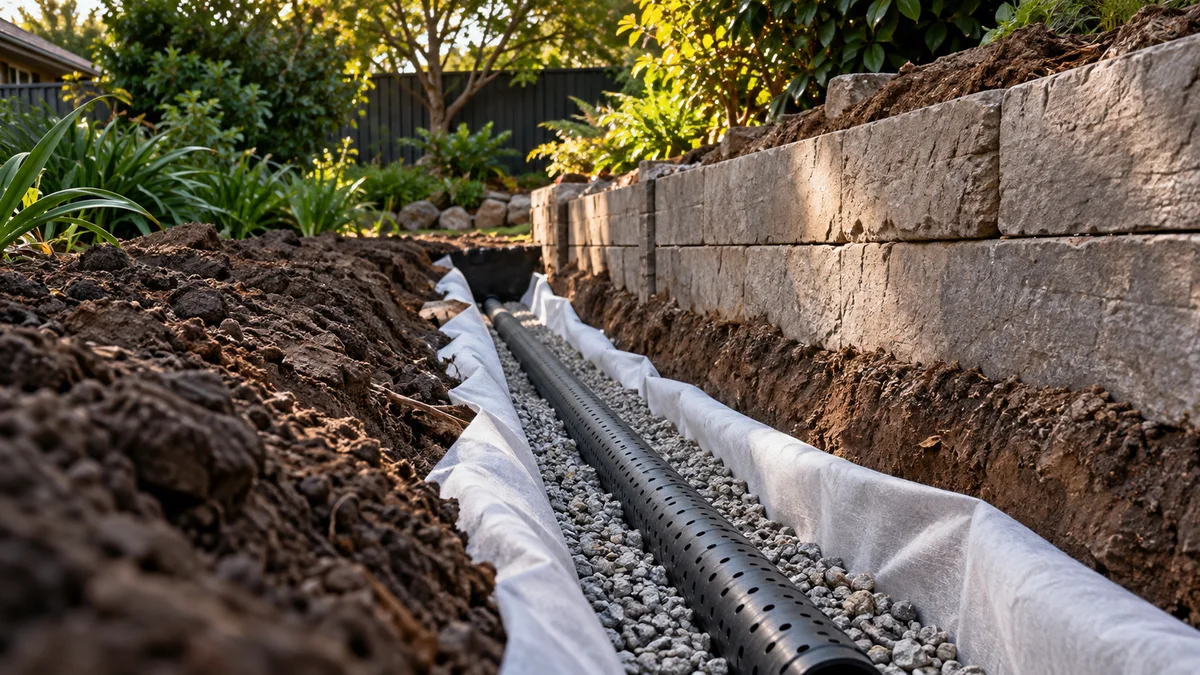
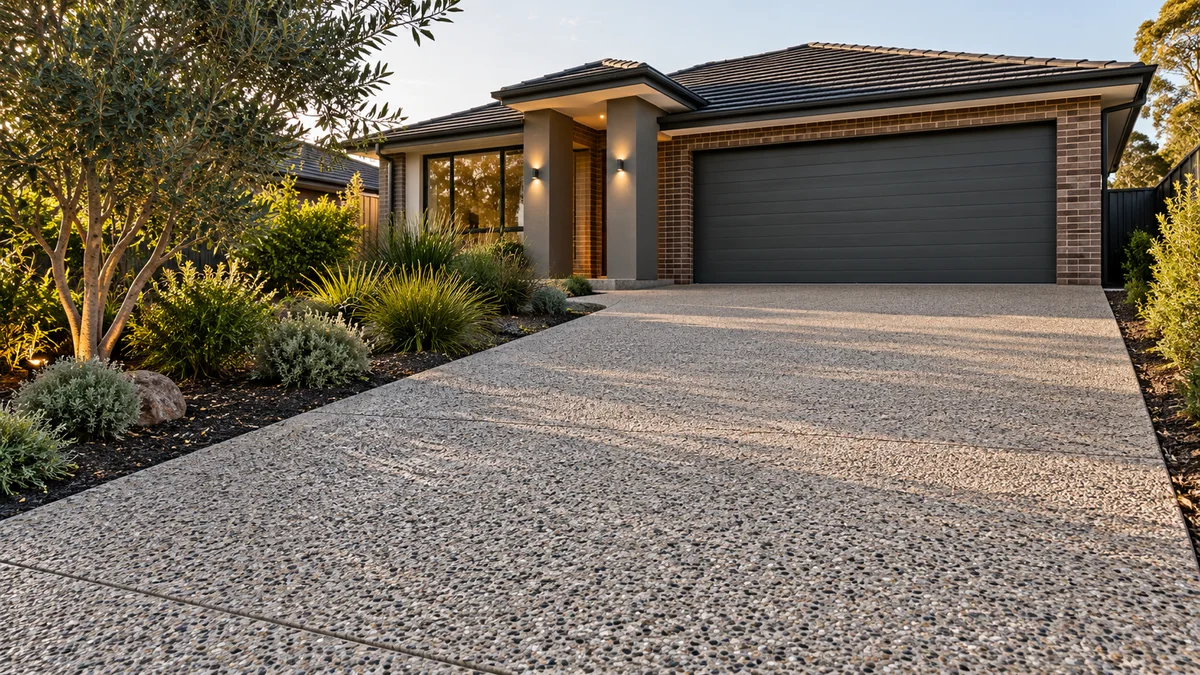
Supporting landscape and groundwork illustrations show connected project considerations, not completed work by Melbourne Retaining Walls.
Every bucket of soil has to sit somewhere, travel somewhere and end up somewhere. Deciding those three things early shapes how smoothly an excavation runs.
Stockpiles take up more room than most people expect, and a pile in the wrong spot can block access, smother lawn or wash onto paths and into drains when it rains. Choose a stockpile location clear of trees, fences and stormwater pits, and consider whether it can be covered or contained.
The haul route is the path material takes from the dig to a truck or bin. It may cross a driveway, a nature strip or a footpath, so think about surface protection, where a truck can safely stand and how the street will be kept clear of tracked soil. If some material is being kept for reuse on site, hold it apart from material that is leaving so the two do not get mixed.
Every property has different constraints. Use these steps to prepare a useful discussion about site excavation.
Send the address, measurements and access photos, plus any existing drawings or reports.
Discuss the options above, any design input, drainage connections and the responsibilities for approvals.
Check preparation, materials, installation, disposal and reinstatement. Agree exclusions and timing before work is scheduled.
Start planning with the details that matter.
Ask about your project ↗Provide drawings or target levels, access measurements and any available ground information. Unknown rock, buried material and disposal requirements can affect the final scope.
For this work, establish the working area and account for the material are useful starting points. Site access, dimensions, existing conditions, disposal and any specialist requirements also need to be reflected in the scope.
A little preparation before excavation starts helps avoid surprises underground and gives the operator a clearer brief. These items are worth collecting or confirming ahead of time.
BYDA is a free national referral service. The plans it returns do not replace locating services on site.
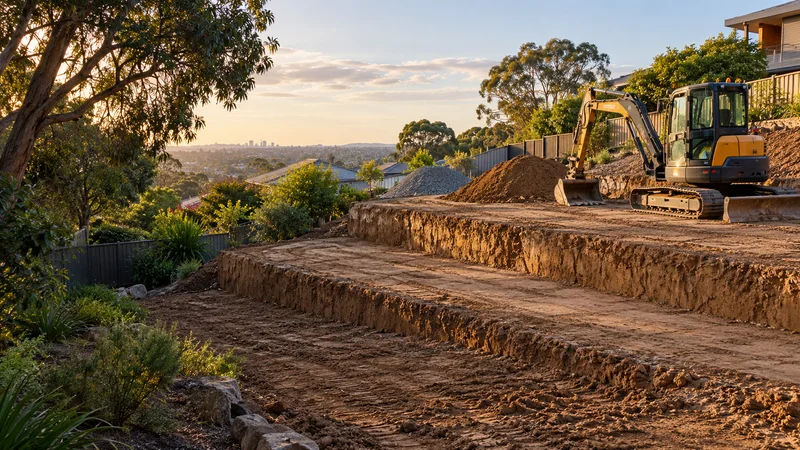
Slope excavation & levelling in Melbourne: plan terraces, finished levels, cut and fill, drainage, access and soil movement.
Learn more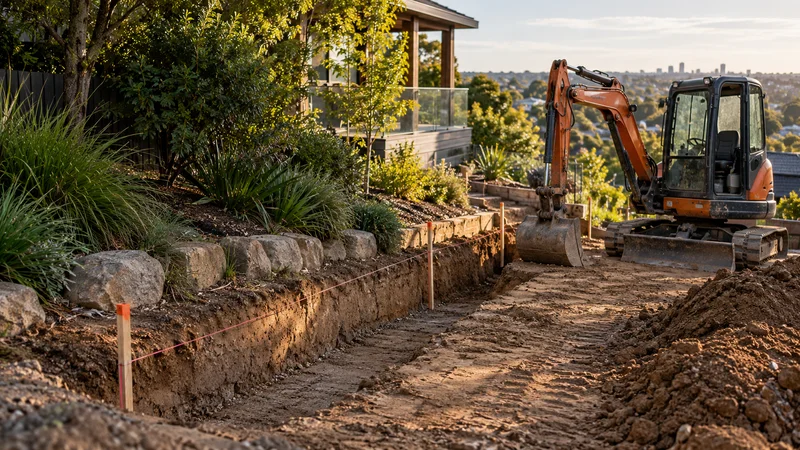
Retaining wall excavation in Melbourne: set-out, service checks, equipment access, footing preparation, spoil handling and reinstatement.
Learn more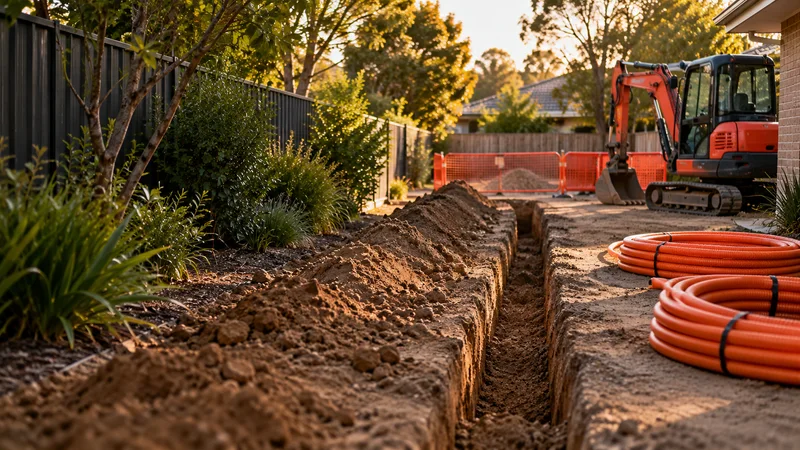
Plan trenches around identified services and the requirements of the relevant installer, allowing for access, separation, reinstatement and protection of existing infrastructure.
Learn moreShare your ideas, your site and what you want to achieve.