
Collect at the right points
Low spots, driveway entries and paved areas may need different collection details. The layout should follow actual levels rather than a convenient pipe route alone.
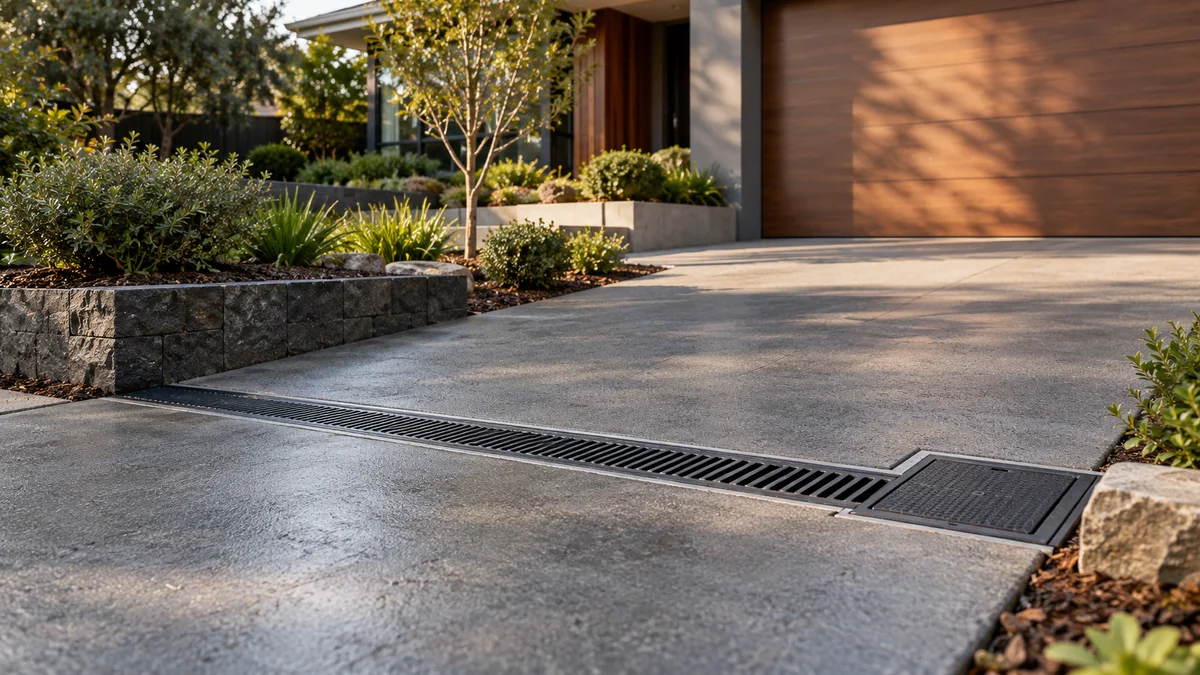
Consider pits, channels and pipework as a connected system, with surface levels, lawful discharge and the relevant qualified trades identified early.
Melbourne Stormwater Drainage Installation projects benefit from a clear understanding of the site, the intended finish and how the work connects with the rest of the property.
Stormwater planning connects hard surfaces and collection points with an appropriate discharge arrangement. It should be coordinated with driveway, patio and retaining wall levels before those surfaces are finished.
A useful plan identifies where water is coming from, how it will be collected and where it can discharge. Pipe routes, excavation depth, access, surface reinstatement and future maintenance should all be considered before installation begins. For this service, collect at the right points and clarify responsibilities are useful matters to discuss when preparing the scope.
Share your property address, approximate dimensions and photos of the work area. Include the route from the street, any nearby structures and what you want the finished space to achieve.
Explore the details ↓A clear brief connects the material, the site and the final result.
Low spots, driveway entries and paved areas may need different collection details. The layout should follow actual levels rather than a convenient pipe route alone.
Confirm who designs, approves and installs each part of the system, including any work requiring a licensed plumber. Existing connections need verification.
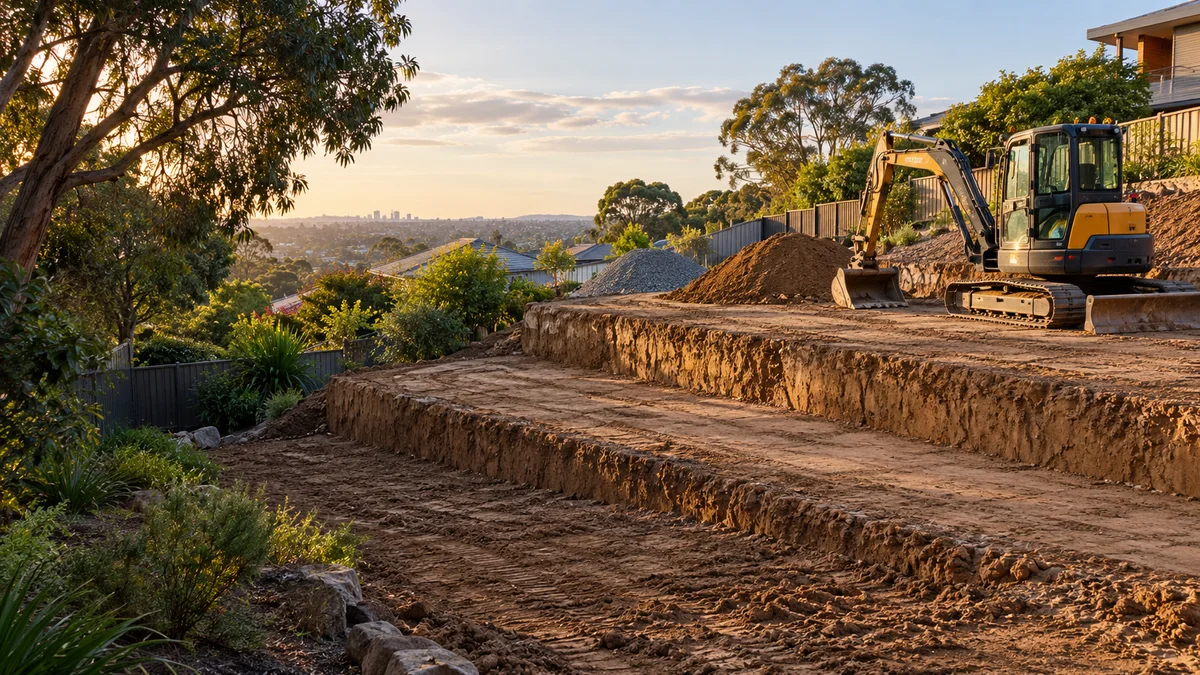
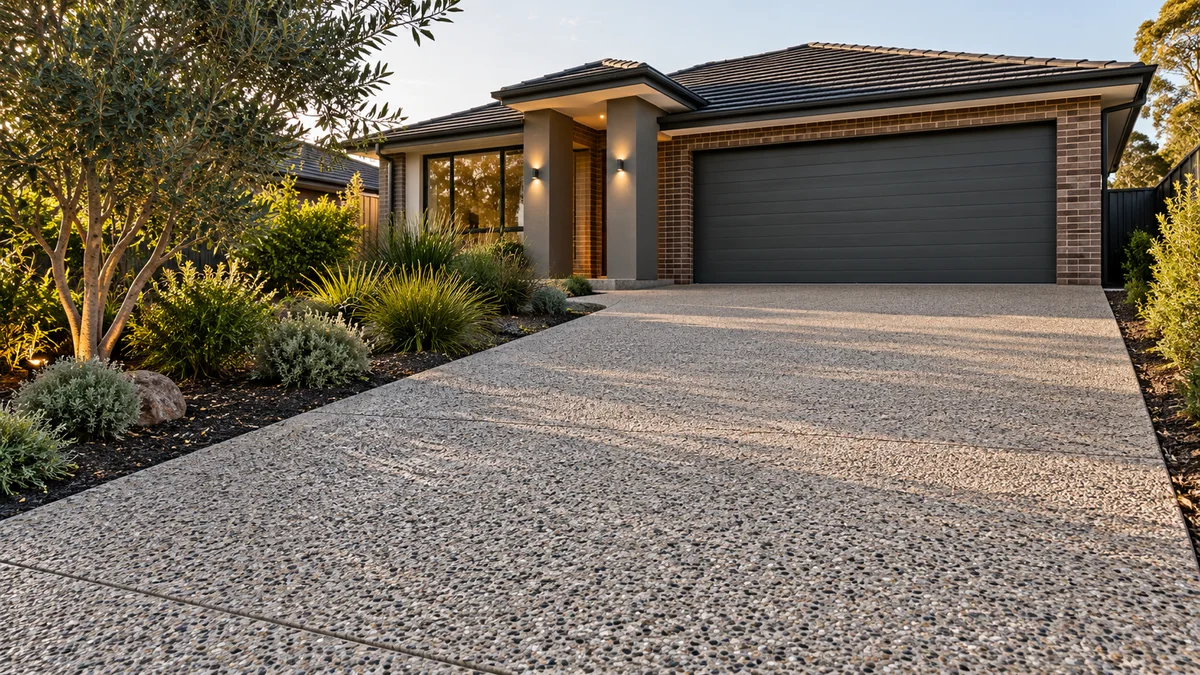
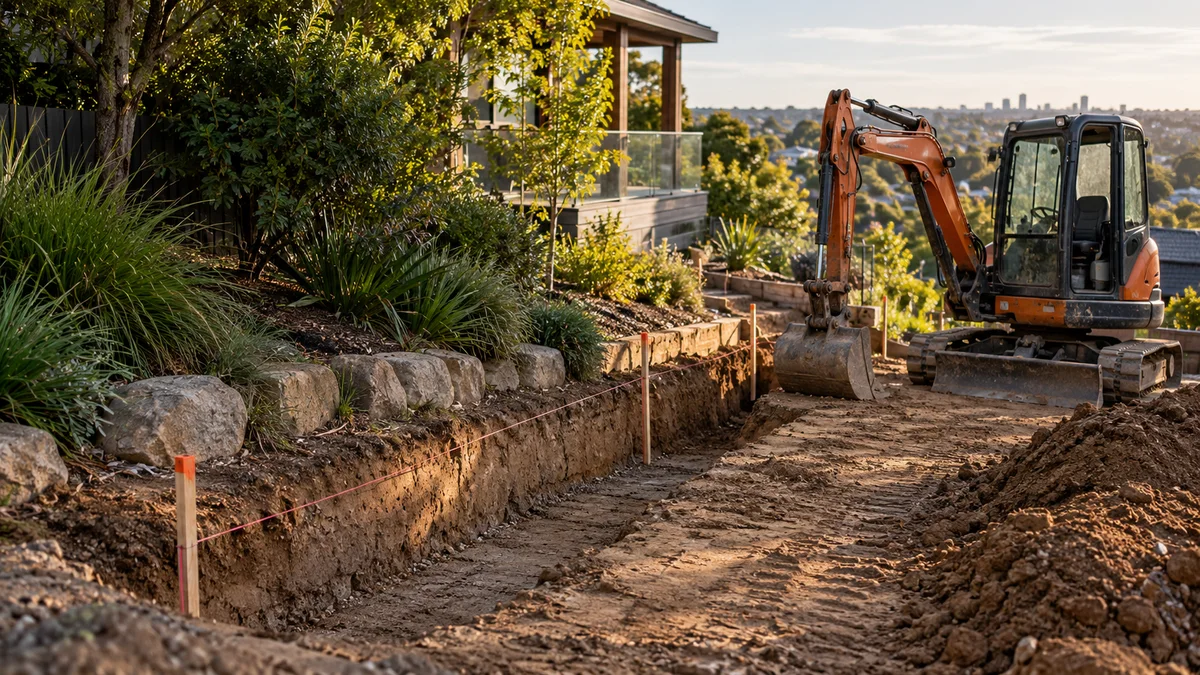
Supporting landscape and groundwork illustrations show connected project considerations, not completed work by Melbourne Retaining Walls.
Hard surfaces shed water quickly, so how and where it is captured shapes the rest of the system. Each collection detail suits a different situation.
Low points in paved areas, courtyards or lawns where water gathers from several directions.
The surrounding surface must fall towards the grate. A removable grate or lid lets leaves and silt be cleared.
Driveway entries, garage thresholds and patio edges, where a long line of collection is needed across the fall.
The grate should suit the traffic it will carry. Channels gather leaves and grit and need regular clearing to keep working.
Roof water carried below ground rather than spilling onto paths, garden beds or against the house.
Existing downpipe connections are often old and unverified. A rainwater tank may sit between the roof and the drain.
Smaller paved areas where the surface can be shaped to shed water towards a garden or a collection point.
Only appropriate where the receiving area can take the water without creating a new wet spot or affecting a neighbour.
Every property has different constraints. Use these steps to prepare a useful discussion about stormwater drainage installation.
Send the address, measurements and access photos, plus any existing drawings or reports.
Discuss the options above, any design input, drainage connections and the responsibilities for approvals.
Check preparation, materials, installation, disposal and reinstatement. Agree exclusions and timing before work is scheduled.
Two questions sit underneath every stormwater project in Victoria: where the water is allowed to go, and who is permitted to install the pipes that take it there.
When building work includes a stormwater drainage system, the council report identifies the property’s legal point of discharge. This is the point where the property’s stormwater is meant to leave the site, and the property owner is responsible for the drainage system up to that point. Knowing where it is helps define the scope from the start.
In Victoria, below-ground stormwater drainage work is plumbing work and must be carried out by a licensed plumber. Excavation, paving and surface preparation around the drain may involve other trades, but the pipework itself sits with the plumber. The Building and Plumbing Commission, formerly the VBA, is the regulator.
When comparing quotes, ask which parts of the system are included, who will hold the relevant licence for the drainage work, and how the connection to the legal point of discharge will be confirmed.
Start planning with the details that matter.
Ask about your project ↗Its condition, capacity, ownership and approved use need to be checked first. A visible pipe is not enough to confirm that a connection is suitable.
For this work, collect at the right points and clarify responsibilities are useful starting points. Site access, dimensions, existing conditions, disposal and any specialist requirements also need to be reflected in the scope.
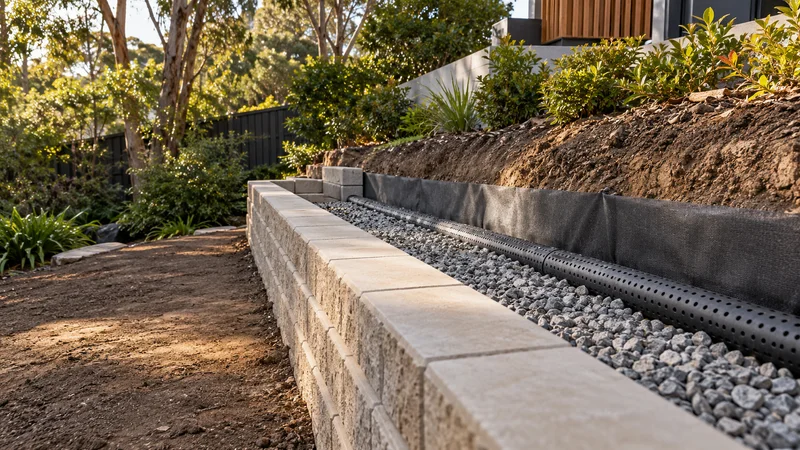
Retaining wall drainage in Melbourne: water sources, drainage layers, collection pipes, outlets, inspection access and quote preparation.
Learn more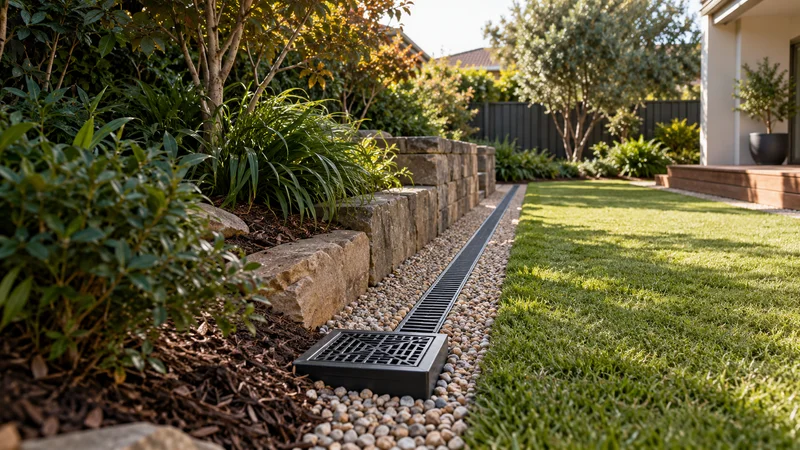
Investigate persistent wet areas and surface flow, then compare drainage and grading options suited to the way your property actually behaves.
Learn more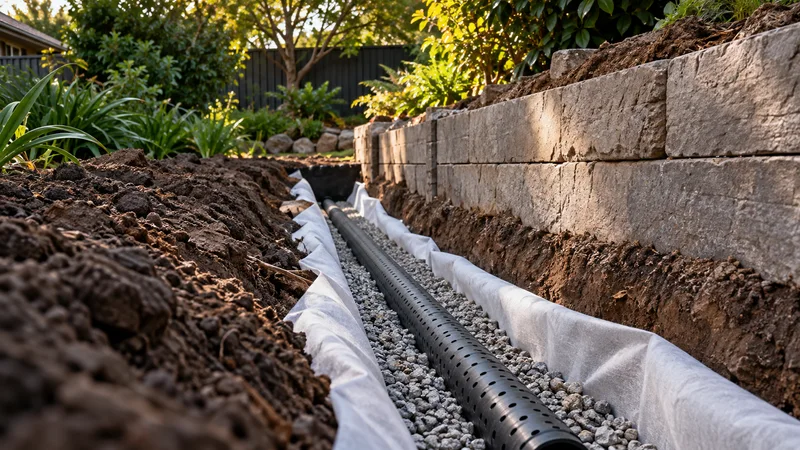
Explore below-ground water collection where appropriate, with trench alignment, filter materials and outlet levels assessed alongside existing foundations and landscaping.
Learn more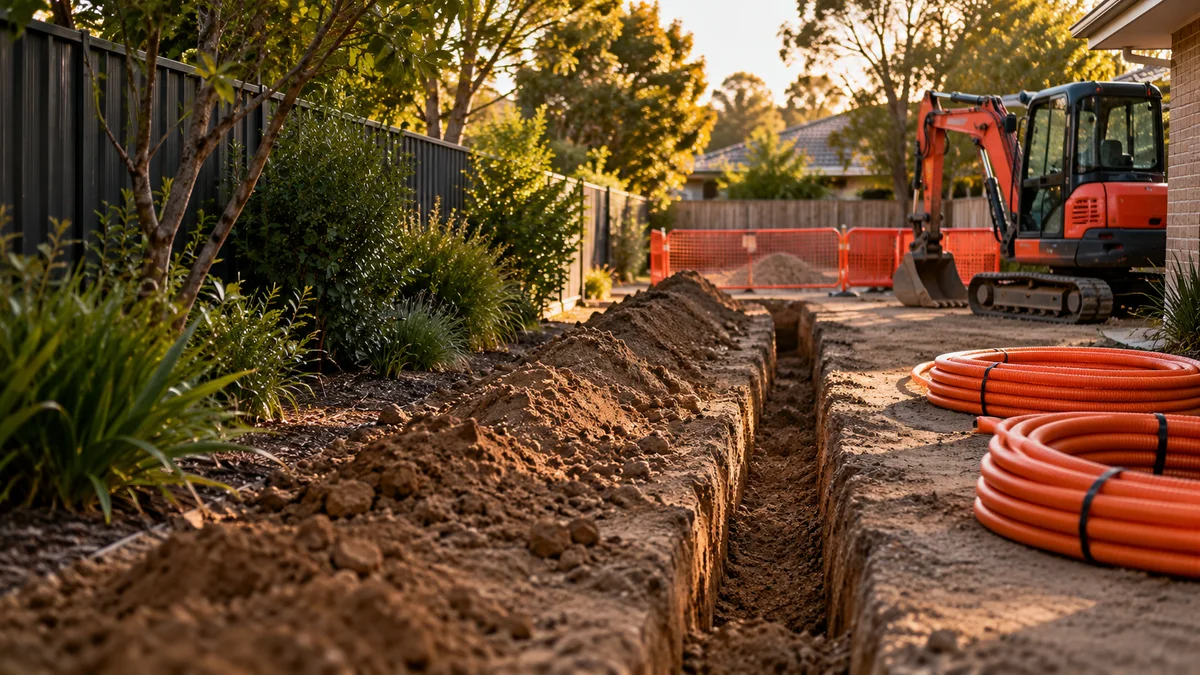
Many properties already have buried stormwater pipes, laid when the house was built or added during later renovations. Understanding them is often the first practical step.
Older lines can be cracked, invaded by roots, disconnected or running to a destination nobody remembers, and they may not reach the legal point of discharge at all. Working out what is already there helps decide whether a line can be reused, needs repair or should be replaced.
A drain camera inspection, locating and any plans held for the property all help build the picture. Before a trench is opened, lodge an enquiry with Before You Dig Australia so plans from registered asset owners can arrive; allow up to two working days, and treat them as a starting point rather than a substitute for locating services on site.
Share your ideas, your site and what you want to achieve.