
Observe the pattern
Photos during and after rain help show where water collects and how long it remains. Mark affected areas and any existing pits or outlets.
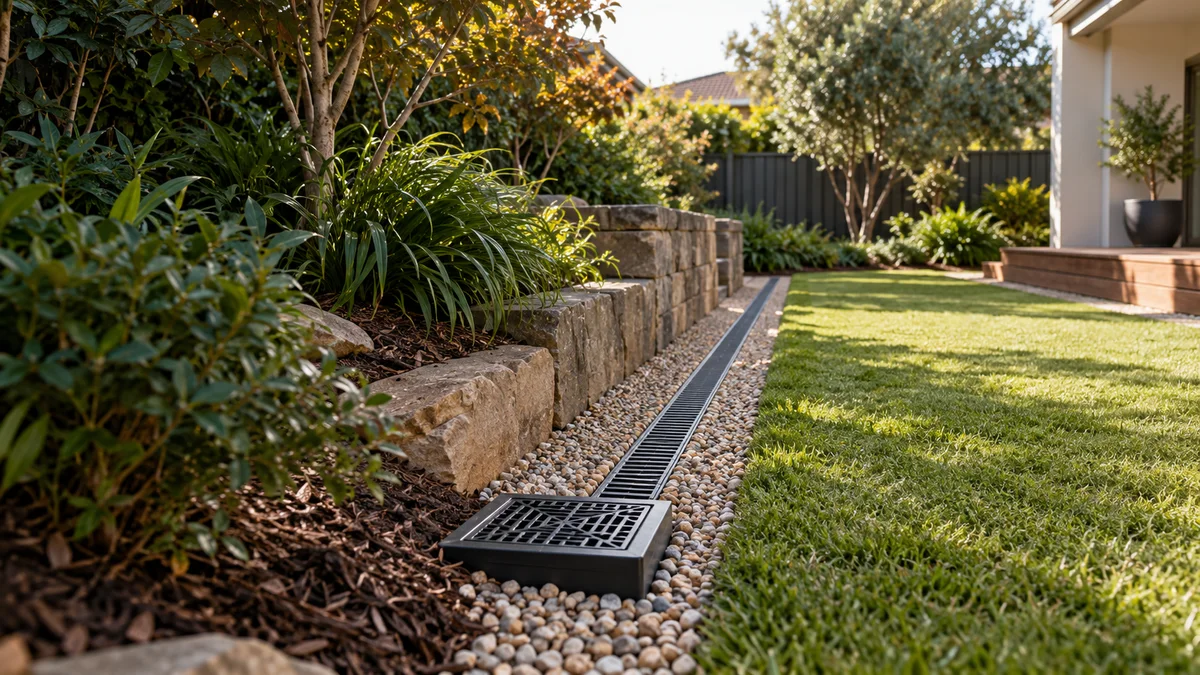
Investigate persistent wet areas and surface flow, then compare drainage and grading options suited to the way your property actually behaves.
Melbourne Land Drainage projects benefit from a clear understanding of the site, the intended finish and how the work connects with the rest of the property.
A wet lawn does not point to one universal solution. Surface levels, compacted ground and water arriving from elsewhere can create similar symptoms but require different responses.
A useful plan identifies where water is coming from, how it will be collected and where it can discharge. Pipe routes, excavation depth, access, surface reinstatement and future maintenance should all be considered before installation begins. For this service, observe the pattern and connect the landscape are useful matters to discuss when preparing the scope.
Share your property address, approximate dimensions and photos of the work area. Include the route from the street, any nearby structures and what you want the finished space to achieve.
Explore the details ↓Before choosing any drainage method, it helps to understand where the water comes from, the route it takes and where it finally stops.
Start at the high side. Water can arrive from a neighbouring property, a sloping verge, a path that sheds towards the lawn or a downpipe discharging onto the ground. Follow that flow downhill and note where it slows, spreads out or disappears into the soil.
Timing matters too. Water that pools during rain and clears soon after usually points to a surface problem, such as a low spot or a flat area with no fall. Ground that stays soft long after rain, or moss and wet patches on higher parts of the lawn, can suggest water moving through the soil or ground that has become compacted.
Earlier changes to the site are often part of the story. Fill placed during past building work, paving added without falls, or a garden bed edge that blocks a natural flow path can each redirect water in ways that are not obvious from above.
A clear brief connects the material, the site and the final result.
Photos during and after rain help show where water collects and how long it remains. Mark affected areas and any existing pits or outlets.
Drainage changes should be considered with paths, garden beds and retaining structures. Moving water from one wet spot should not simply create another.
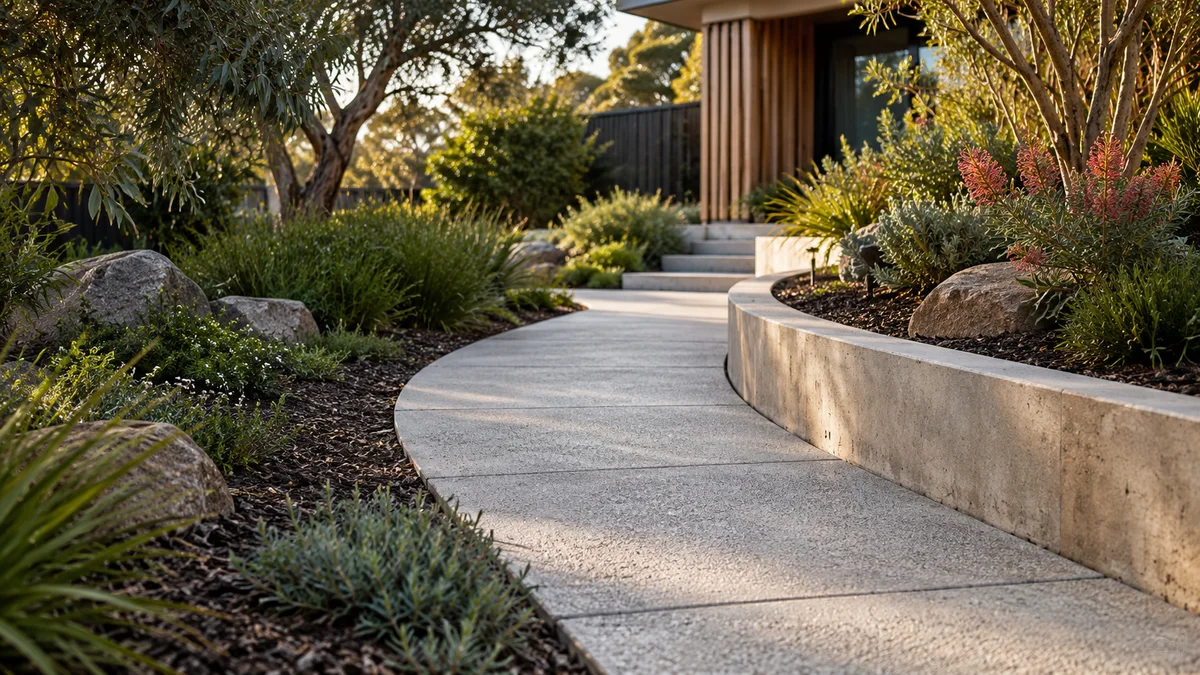
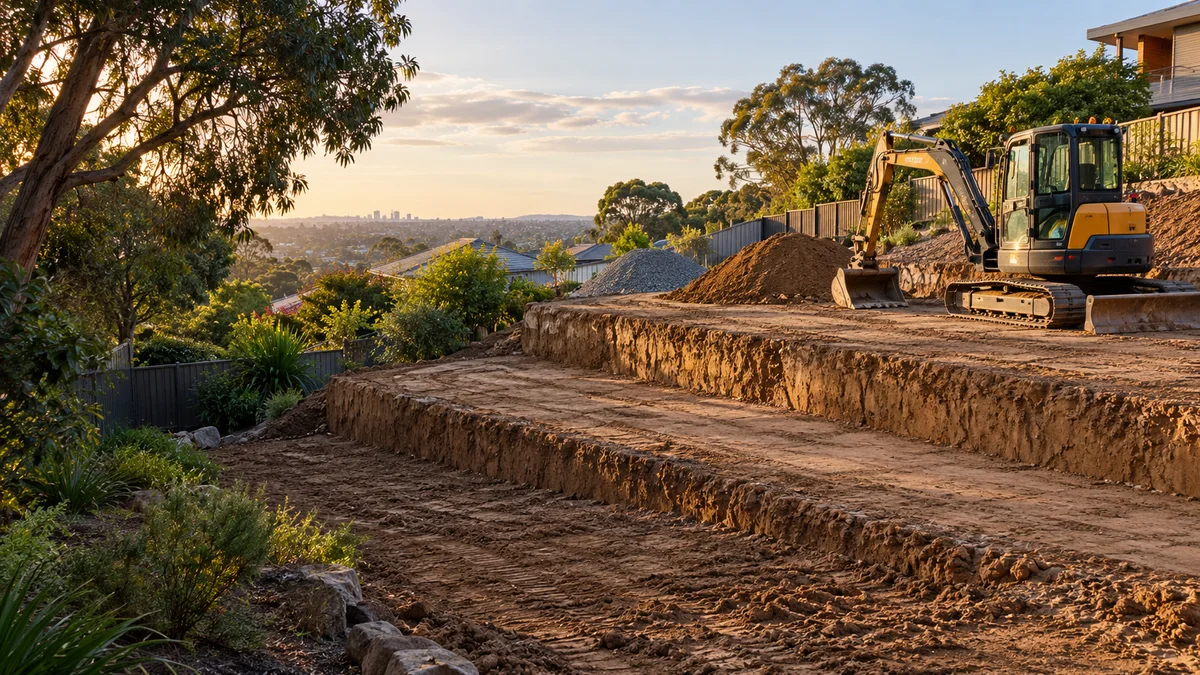
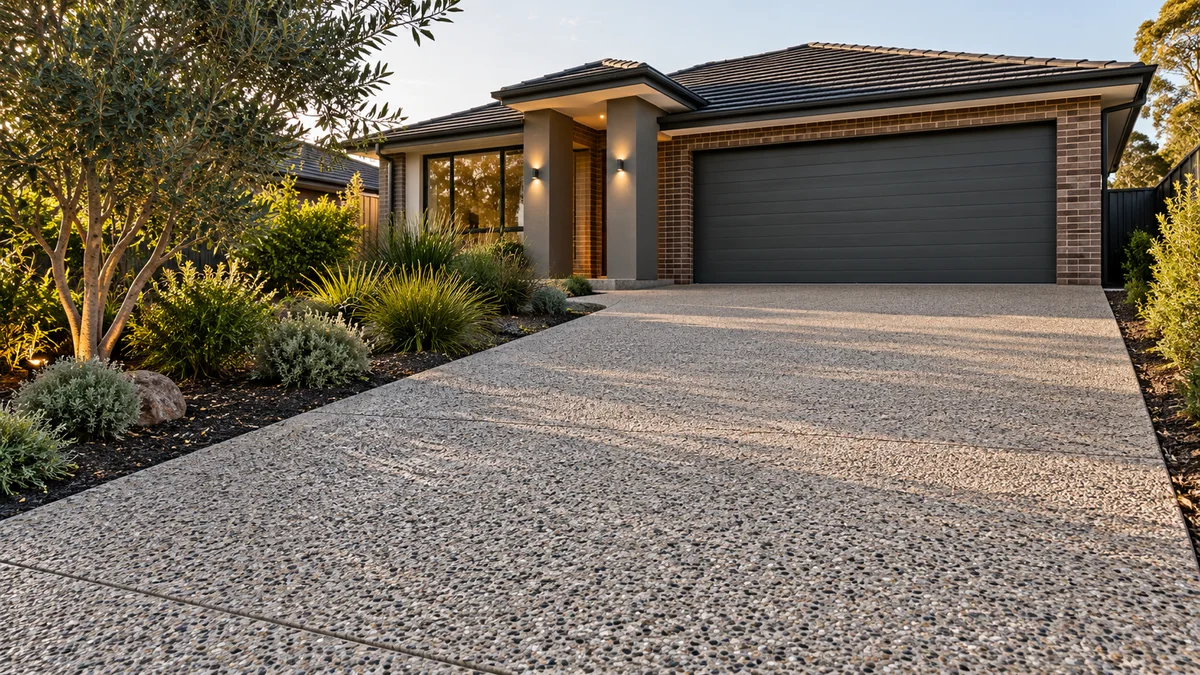
Supporting landscape and groundwork illustrations show connected project considerations, not completed work by Melbourne Retaining Walls.
Land drainage covers several quite different approaches. Some change the surface, others work below it, and many sites use a combination.
Low spots and flat areas where water collects because the ground has no fall away from it.
Changing levels affects paths, thresholds, tree roots and neighbouring ground. Water still needs somewhere appropriate to go once it moves.
Larger gardens with room for a gentle, planted channel that slows and guides surface flow across the site.
Takes up usable space and needs a suitable end point. When well shaped it can read as a landscape feature rather than drainage.
Defined collection points beside paving, at the foot of a slope or where water must be captured before it reaches the house.
Relies on buried pipework and a confirmed discharge arrangement, so it moves into a formal stormwater scope.
Ground that stays saturated because water is moving through the soil rather than across it.
Needs a viable outlet and ongoing access. It does little for water sitting on a compacted surface.
Lawns where compaction stops rain soaking in, rather than a lack of fall or water arriving from elsewhere.
Can improve absorption but will not correct levels. Often most useful alongside one of the other approaches.
Every property has different constraints. Use these steps to prepare a useful discussion about land drainage.
Send the address, measurements and access photos, plus any existing drawings or reports.
Discuss the options above, any design input, drainage connections and the responsibilities for approvals.
Check preparation, materials, installation, disposal and reinstatement. Agree exclusions and timing before work is scheduled.
Start planning with the details that matter.
Ask about your project ↗That depends on the cause and available discharge route. A site assessment can help distinguish surface ponding from water moving through the ground.
For this work, observe the pattern and connect the landscape are useful starting points. Site access, dimensions, existing conditions, disposal and any specialist requirements also need to be reflected in the scope.
Drainage work happens in the garden you want to enjoy afterwards, so think about how the landscape will look and function once it is finished.
Trenches and regraded areas leave disturbed ground. Clarify whether turf will be relaid, reseeded or left to you, and expect new areas to need time to settle and establish.
Even after drainage improves, some parts of a garden will stay damper than others. Plants that tolerate occasional wet feet can suit low areas better than fighting the conditions.
Trenching close to established trees can damage roots. Overlays such as vegetation overlays can trigger planning permit requirements, and a free VicPlan Planning Property Report shows which apply to your property.
Raised edging, deep mulch and bed borders can dam surface flow. Small changes to how beds meet the lawn are sometimes part of the solution rather than an afterthought.
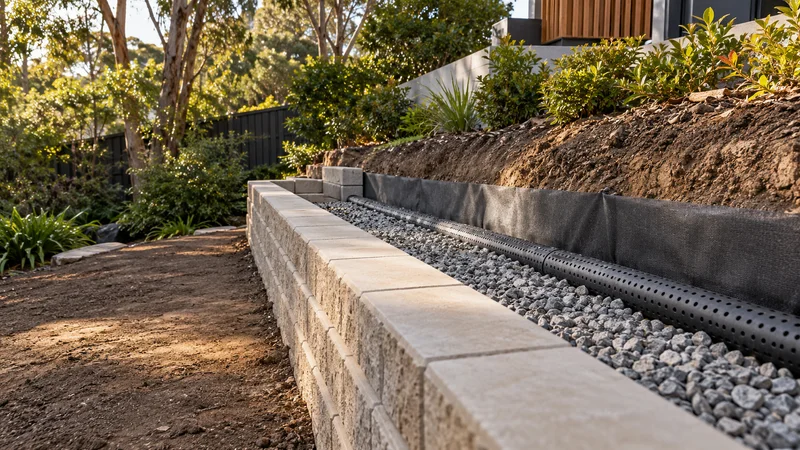
Retaining wall drainage in Melbourne: water sources, drainage layers, collection pipes, outlets, inspection access and quote preparation.
Learn more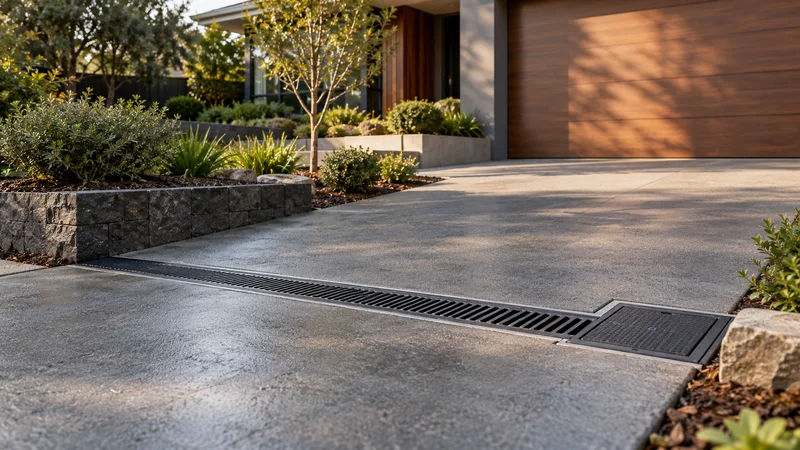
Consider pits, channels and pipework as a connected system, with surface levels, lawful discharge and the relevant qualified trades identified early.
Learn more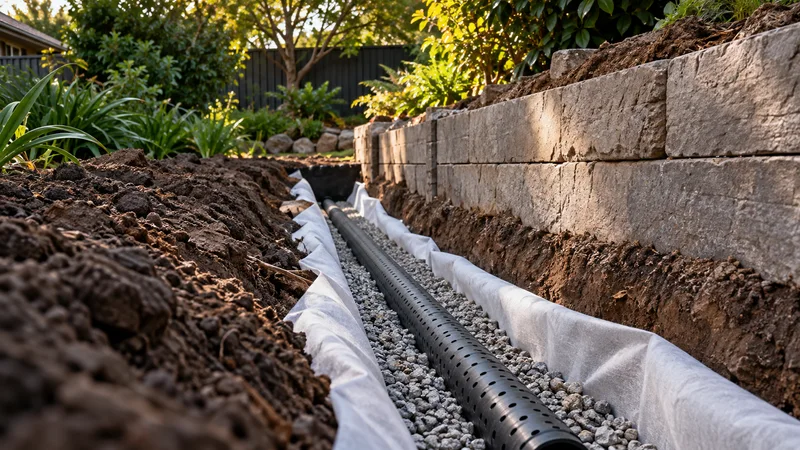
Explore below-ground water collection where appropriate, with trench alignment, filter materials and outlet levels assessed alongside existing foundations and landscaping.
Learn moreShare your ideas, your site and what you want to achieve.